
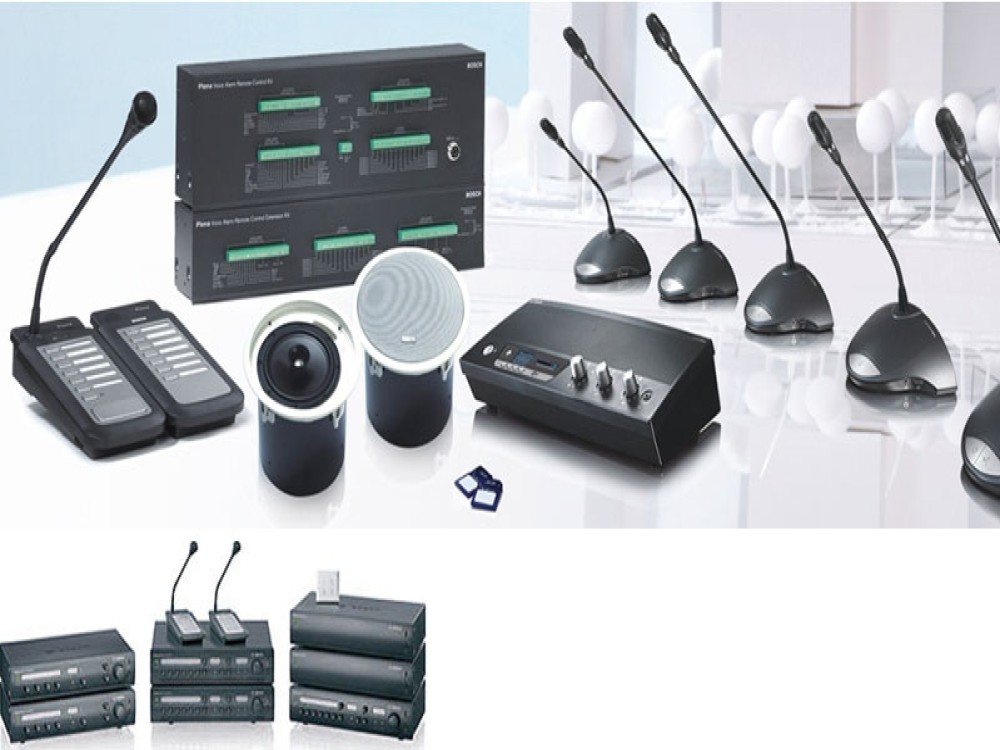
 Automation & BMS Solutions
Comprehensive Capabilities
1. Public Address (PA) Systems: Networked Audio Architecture & Scope

An IP Based Public Address and Voice Alarm (PAVA) Systems Design provides a dual-purpose electroacoustic communication and life-safety evacuation infrastructure. Compliant with EN 54-16 and NFPA 72 standards, our networked audio solutions distribute uncompressed digital audio over standard Ethernet networks using Dante/AES67 protocols, delivering crystal-clear acoustic speech intelligibility, flexible multi-zone paging, and automated emergency evacuation broadcasts interlocked directly with the building’s Fire Alarm System.
2. Functions of a Public Address System
Our PAVA audio designs deliver versatile routine and emergency capabilities:
- Multi-Zone Selective & All-Call Paging: Direct voice announcements to individual floors, production sheds, or the entire campus via touchscreen paging stations.
- Automated Fire Alarm Matrix Interlocking: Instant audio override upon fire alarm trigger, broadcasting prioritized life-saving instructions across affected zones.
- Phased & Cascaded Evacuation Broadcasts: Automated evacuation messages to fire floors and standby alerts to other floors, preventing stairwell stampedes.
- Ambient Noise Sensing (ANS): Sensing microphones automatically boosting speaker volume in noisy weaving sheds or generator rooms to ensure voice clarity.
- Scheduled Bell & Shift Change Chimes: Automated tone and message scheduler broadcasting shift start/end chimes and prayer call alerts in factories.
3. Importance & Necessity of a Public Address System Design
Decades of international fire safety research demonstrate that standard fire alarm bells create confusion and delayed evacuation because occupants cannot decipher the nature of the emergency. In high-density garments factories in Bangladesh, ambiguous alarm sounds have historically led to tragic stampedes.
Clear voice instructions in Bengali and English accelerate evacuation response times by over 60%. A professionally engineered PAVA design guarantees high Speech Transmission Index (STI ≥ 0.50), ensuring spoken words remain intelligible above factory background noise, satisfying statutory compliance audits by RSC, Nirapon, DIFE, and Fire Service (FSCD).
4. Design Process for Public Address Systems
Techno Apogee executes electroacoustic engineering through precision mathematical modeling:
- Stage 1: Ambient Noise Survey & Acoustic Mapping: Measuring ambient dBA noise levels across factory floors, lobbies, and stairwells to determine target Sound Pressure Levels (SPL).
- Stage 2: EASE Acoustic Simulation & Speaker Sizing: Computer-aided modeling calculating direct SPL distribution and STI speech clarity across 3D room geometries.
- Stage 3: Speaker Selection & Tapping Layout: Positioning fire-rated ceiling flush speakers (6W/12W), wall column speakers, and high-SPL weatherproof horn speakers (30W/50W).
- Stage 4: Amplifier Load Calculation & Redundancy: Sizing high-efficiency Class-D 100V line power amplifiers with automatic N+1 hot-standby failover.
- Stage 5: Fire-Resistant Cable Plant Engineering: Designing fire-rated cabling (BS 5839-8) maintaining circuit continuity under 950°C fire conditions for 120 minutes.
- Stage 6: SPL Verification & Battery Autonomy Testing: Calibrated sound meter commissioning and verifying 24-hour standby plus 30-minute full-load emergency evacuation battery operation.
5. Applicable Sectors for Public Address Systems
Our PAVA designs protect personnel across diverse facility types:
- RMG, Garment & Textile Manufacturing: Life-safety voice alarm infrastructure across massive multi-story production sheds and dining halls.
- Pharmaceutical & Food Processing Plants: Cleanroom-rated, flush-sealed speakers resistant to chemical washdowns.
- Commercial Shopping Malls & Retail Hubs: Multi-zone audio distribution blending subtle background music with selective announcements.
- International Airports & Transit Terminals: High-intelligibility passenger boarding announcements and terminal-wide paging.
- Universities & School Campuses: Campus-wide bell scheduling and emergency lockdown announcements.
Organizations That Implemented This Solution